
The Nadiope Cooperative — How Direct Trade Is Changing Lives in Bududa
By Brian George Kkunsa, Director of Sourcing | March 31, 2026
Behind every bag of Tribes African Coffee, there is a story. But some stories deserve to be told more loudly than others.
This past harvest season, I spent three days in Bududa, a hilly district on the southern slopes of Mount Elgon. The road from Mbale winds through lush valleys and steep switchbacks, past terraced hillsides where every available inch of arable land is planted with bananas, maize, and—most importantly—coffee. At the end of that road, tucked into a hillside overlooking the Suam River, sits the Nadiope Cooperative.
Nadiope is not the largest cooperative we work with. But it may be the most remarkable.
Formed in 2018 by a group of widows and single mothers, Nadiope began with just 12 members and a shared determination to support their families through coffee farming. Today, the cooperative has grown to 47 members, all but three of whom are women. And in an industry where women often do the majority of the labor while men control the finances, Nadiope is quietly rewriting the rules.
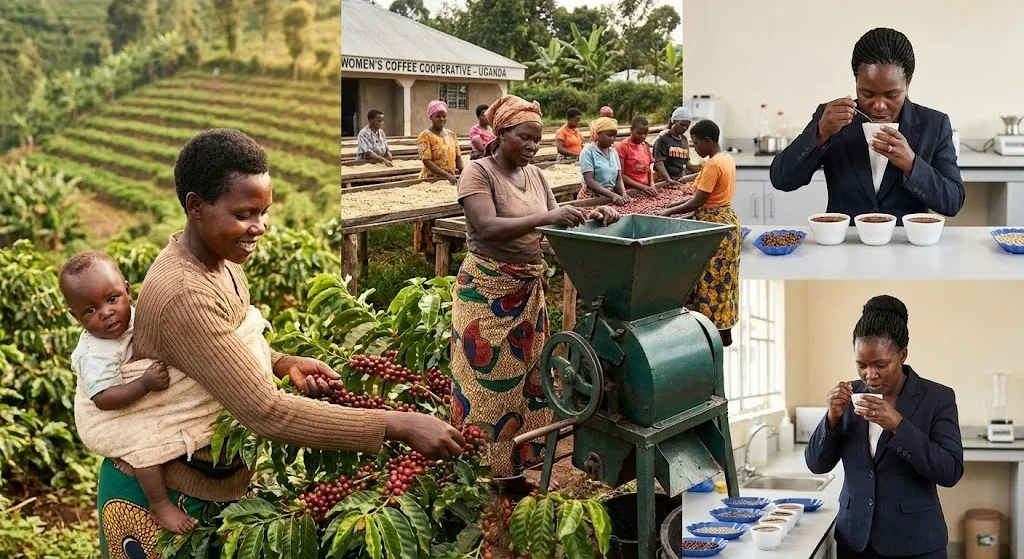
The Women Behind the Beans
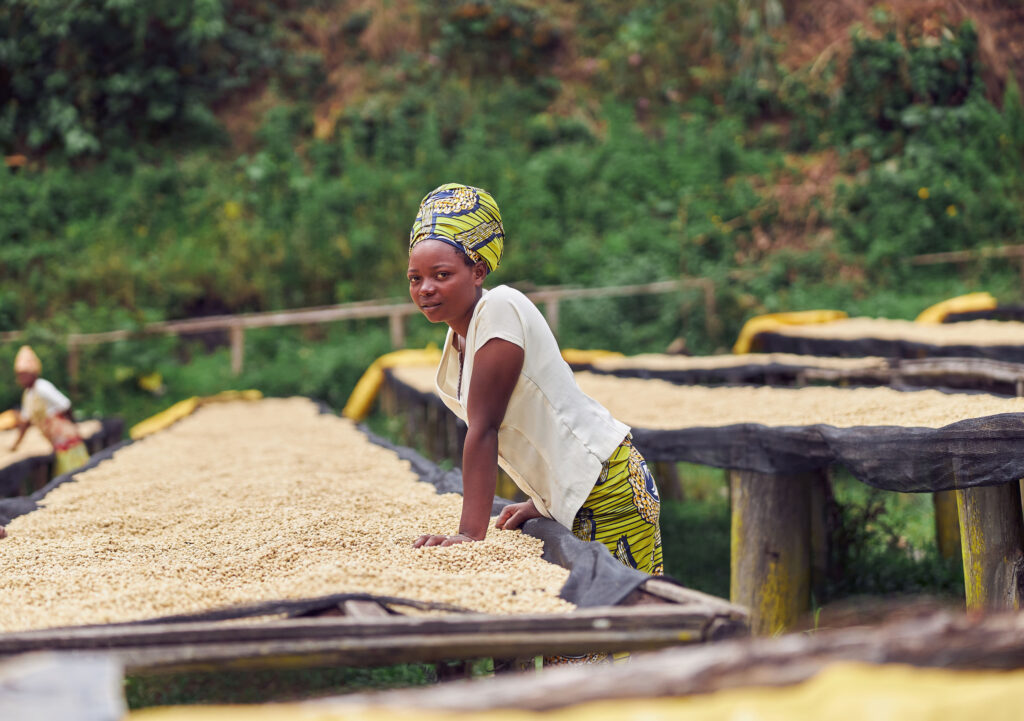
I arrived at the cooperative’s washing station on a Tuesday morning. The sun had just crested the ridge, and the air was cool with the remnants of overnight rain. Spread across the drying tables were hundreds of kilograms of coffee cherries, glowing like rubies in the early light.
I was greeted by Grace Nadiope, the cooperative’s chairperson. Grace is a farmer in her late fifties with calloused hands and a laugh that fills the room. She inherited her coffee trees from her late husband, who passed away in 2010. For years, she sold her cherry to middlemen who dictated prices and paid late—if they paid at all.
“We were invisible,” Grace told me, speaking through a translator. “The buyers would come, take our coffee, and tell us what they would pay. If we refused, there was no one else to sell to. We worked the land, but we did not control our own labor.”
In 2018, Grace and 11 other women decided to change that. They pooled their resources, registered as a cooperative, and began processing their own coffee. The first year was brutal. They lacked equipment, training, and a reliable buyer. But they had something else: a commitment to each other.
“A cooperative is like a family,” Grace explained. “When one of us struggles, we all struggle. When one succeeds, we all celebrate.”
The Impact of Direct Trade
Tribes African Coffee began working with Nadiope in 2021. At the time, the cooperative was selling to a broker who paid roughly 30% below the specialty coffee market rate. Their coffee was good—the altitude and volcanic soil saw to that—but without a direct connection to a roaster, they had no way to capture the value their quality deserved.
Our partnership changed that.
Through our direct trade model, we eliminated the broker. We negotiated a price directly with the cooperative—a price that reflected the quality of their coffee and the cost of sustainable production. We paid upfront, 100%, before a single bean was shipped. And we committed to purchasing their entire harvest, giving them the stability to plan for the future.
The impact has been transformative.
Before direct trade:
- Members earned an average of 600,000 UGX (approximately $160) per harvest.
- Payments were irregular, often arriving months after the coffee was sold.
- Families struggled to afford school fees, medical care, and farm inputs.
Today:
- Members earn an average of 2.1 million UGX ($560) per harvest—more than triple their previous income.
- Payments are made within two weeks of delivery.
- The cooperative has purchased its own pulping machine, reducing processing time and improving quality.
- A savings program now allows members to access small loans for emergencies and school fees.
I asked Grace what the biggest change has been. She didn’t mention money.
“The biggest change is that we are seen,” she said. “Before, we were just women who grew coffee. Now, we are business owners. When our children see us negotiating contracts, when they see us making decisions about our land and our money, they see something different. My daughter is studying agriculture at university now. She wants to come back and help us manage the cooperative. That is the change.”
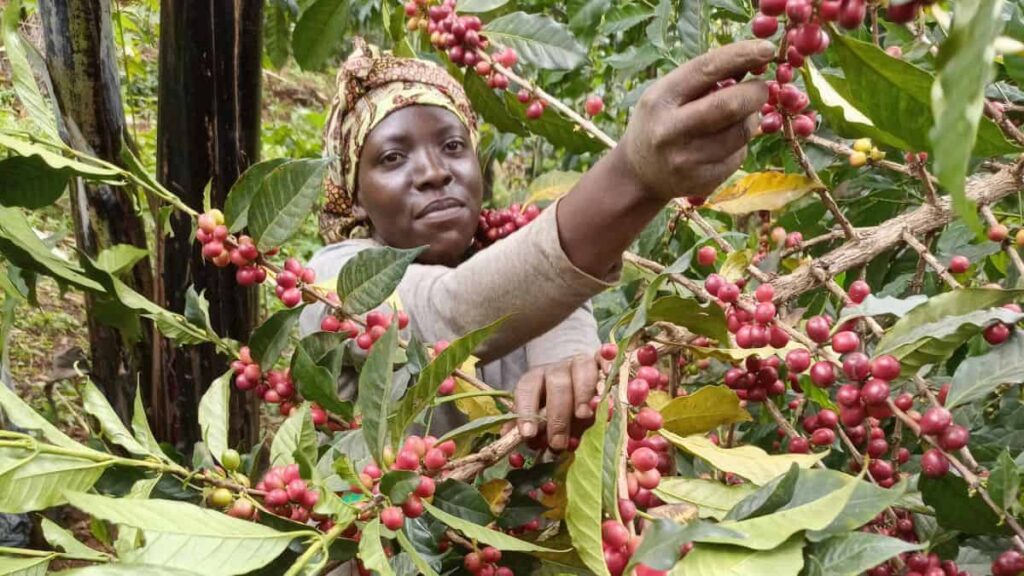
A Day on the Farm
On my second day in Bududa, I walked the land with Esther, one of the cooperative’s founding members. Esther’s plot is just over two acres, a steep hillside that she climbs multiple times a day during harvest season. Her coffee trees are interspersed with banana plants, which provide shade and help retain soil moisture—a traditional farming practice that modern agronomists are now rediscovering.
Esther pointed out the difference between her trees and those on neighboring plots that are not part of the cooperative. Her trees were fuller, the leaves a deeper green. She explained that with the higher, more reliable income from direct trade, she had been able to purchase organic compost and mulch, which she applies twice a year.
“Good land gives good coffee,” she said simply. “If you take care of the land, the land takes care of you.”
We stopped at a small structure where her daughter was sorting cherries by hand, removing any that were underripe or damaged. This meticulous attention to detail—done at the farm level before cherries even reach the washing station—is one reason Nadiope’s coffee consistently cups in the 84–86 point range, well within specialty coffee standards.
“We don’t have big machines,” Esther said. “But we have our hands and our eyes. We put love into every cherry.”
Challenges That Remain
Despite the progress, the women of Nadiope face significant challenges.
Access to capital remains a barrier. While the cooperative now has a pulping machine, they still lack raised drying beds (critical for even drying) and a proper storage facility. Climate change is also taking a toll. Rising temperatures have pushed coffee berry borer infestations higher up the mountain, and shifting rainfall patterns have made flowering less predictable.
Perhaps most pressing is land tenure. Many of the cooperative’s members farm on land held under customary tenure, which can make it difficult to secure loans or make long-term investments. The women are working with a local NGO to formalize land rights, but progress is slow.
Grace remains optimistic.
“We have come so far in five years,” she said. “Give us five more, and we will show you what is possible when women are given the resources to succeed.”
How You Can Support
When you purchase coffee from Tribes African Coffee, you are not just buying a bag of beans. You are supporting farmers like Grace and Esther. You are investing in a model that pays fairly, pays promptly, and respects the labor and knowledge of the people who grow your coffee.
We encourage you to learn more about our sourcing practices. Better yet, visit our cafe and ask about the Nadiope Cooperative. We’ll be happy to tell you more.
To Grace, Esther, and the 45 other women of Nadiope: thank you for welcoming us into your community. Thank you for your coffee. And thank you for showing us what true partnership looks like.
All photographs accompanying this article were taken on location in Bududa, Uganda, with the full consent of the cooperative members. A portion of the proceeds from every bag of Nadiope coffee is reinvested directly into the cooperative’s savings program.